The Craft · 7 min read · 15 October 2026
What is Lucknawi Chikankari? A Complete Guide to the Craft
Where it comes from, how a single kurti is made by hand, and how to recognise the real thing.
The Craft · 7 min read · 15 October 2026
Where it comes from, how a single kurti is made by hand, and how to recognise the real thing.
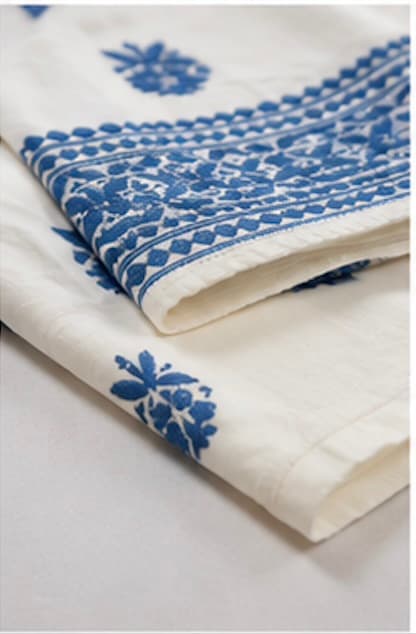
Chikankari is a form of hand embroidery from Lucknow, in the north Indian state of Uttar Pradesh. The word comes from the Persian chikan, meaning a kind of delicate needlework, and the craft has been practised in and around Lucknow for roughly four hundred years, since the Mughal period. At its simplest, Chikankari is white, or near-white, thread embroidered onto a light fabric — but that plain description hides an enormous amount of skill.
A single piece passes through many hands before it is finished. First the design is printed onto the cloth with carved wooden blocks and a washable blue dye. The printed cloth then travels out to artisans — most of them women working from home across the Chowk, Daliganj and Thakurganj neighbourhoods — who embroider over the printed lines. When the embroidery is complete, the fabric is washed, and the blue printing dye disappears, leaving only the thread.
What makes Lucknawi Chikankari distinct is its vocabulary of stitches. There are more than thirty traditional stitches, but a handful do most of the work: tepchi, a fine running stitch that outlines a motif; bakhiya, the famous shadow work done from the reverse of the cloth so the pattern shows as a soft haze; phanda and murri, tiny knots that build up grapes and grains; and jaali, where the threads of the fabric are teased apart with the needle to make a net, without a single thread being cut.
The fabric matters as much as the thread. Chikankari is traditionally worked on breathable, fluid cloth — mulmul and muslin cotton, fine cotton, rayon, chanderi, georgette and organza. These fabrics let the embroidery sit softly and keep the garment light enough to wear through a north Indian summer. A heavier, stiffer cloth fights the needle and flattens the work.
Because every stitch is placed by hand, no two pieces are ever identical, and the time involved is real: a lightly worked kurti might take a few days, while a densely embroidered anarkali can take weeks or even months on the frame. This is why genuine Chikankari is not cheap, and why machine imitations exist — they copy the look at a fraction of the effort.
So how do you recognise the real thing? Turn the garment inside out. Hand Chikankari shows slight irregularity, visible knots and thread tails on the reverse; machine work has a continuous, locked thread and a uniform, mechanical back. Hold jaali up to the light — if the net is slightly uneven and the threads at each opening are whole rather than cut, it is authentic. And ask what the fabric is: honest sellers will tell you the exact cloth, embroidery and thread.
At Sughari, every piece is hand embroidered in Lucknow, never machine-made, and we tell you the fabric, the stitches and the make of each garment on its product page. If you are new to the craft, a simple cotton kurti is the easiest way to begin — light to wear, easy to care for, and unmistakably handmade.
Written by Sughari Atelier. Questions are welcome.
Keep reading
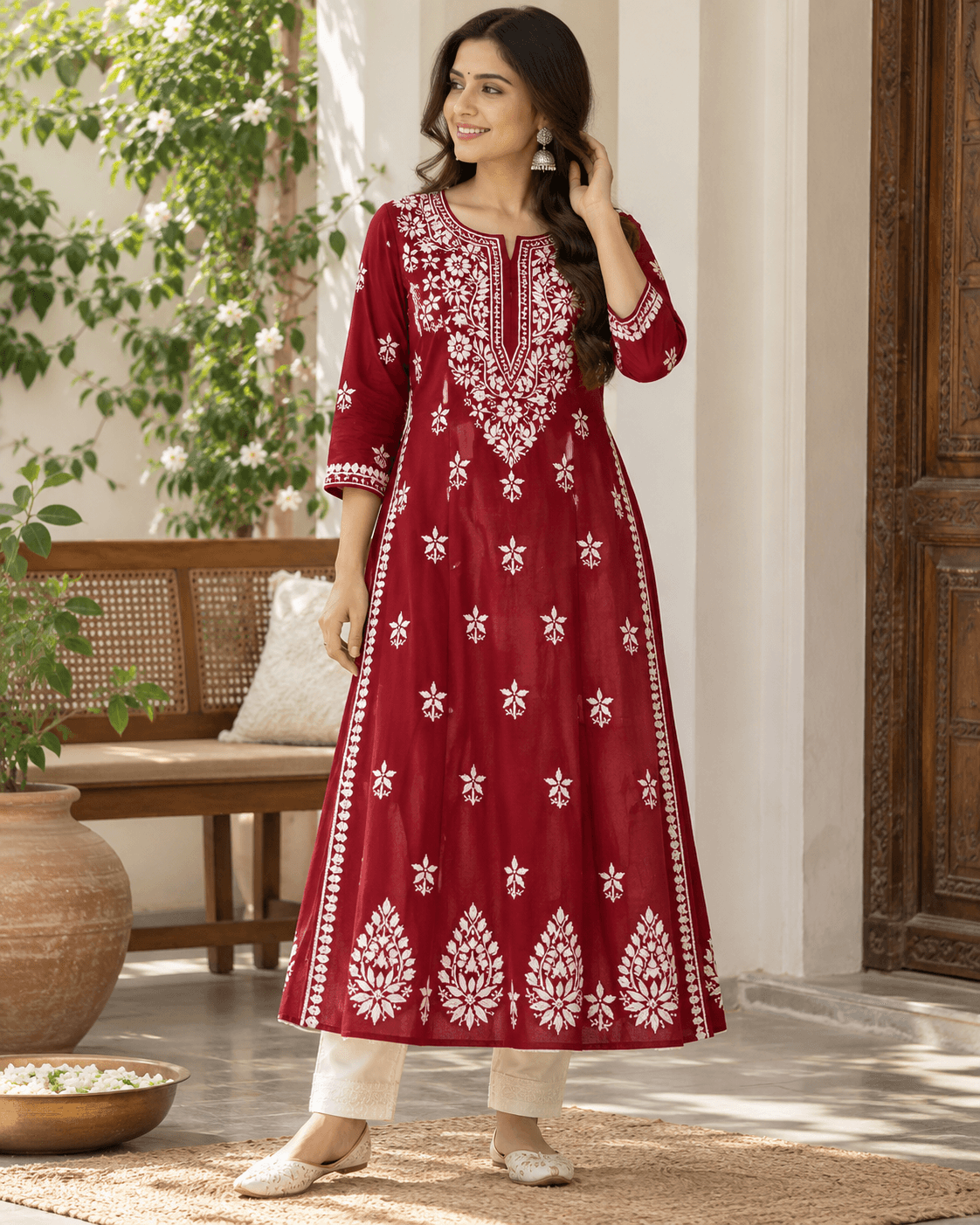
Everything that goes into a Chikankari suit set, and how to choose one for work, festivals and weddings.
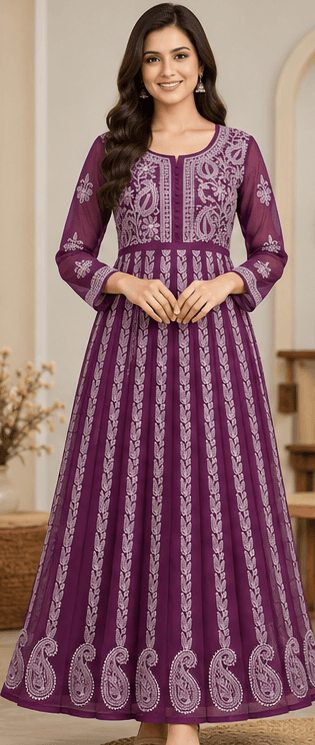
Why the flowing Anarkali is the most-loved festive silhouette in Chikankari — and how to choose yours.
From the collection
Mal cotton nayra cut with ghas patti work