The Craft · 5 min read · 9 October 2026
How to Identify Authentic Chikankari Embroidery
Five quick checks that separate genuine hand Chikankari from machine-made imitations.
The Craft · 5 min read · 9 October 2026
Five quick checks that separate genuine hand Chikankari from machine-made imitations.
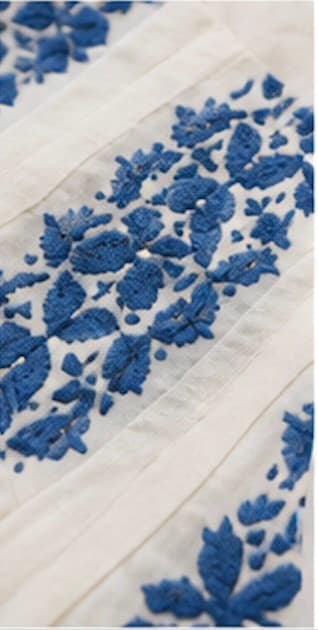
Genuine Lucknawi Chikankari is hand embroidered, and machine imitations are now common. The good news is that you can tell the difference in under a minute with a few simple checks — most of them on the reverse of the cloth.
First, turn the garment inside out. Hand embroidery shows slight irregularity, visible knots and small thread tails on the back. Machine work has a continuous, locked thread and a uniform, repetitive back — often with a faint grid where the machine has moved. If the reverse looks too perfect, be suspicious.
Second, look at the bakhiya (shadow work). True bakhiya is worked from the wrong side of the cloth, so the pattern reads as a soft shadow through the fabric and the denser thread sits on the reverse. A printed or machine version sits flat on the front with no shadow depth.
Third, test the jaali. Authentic jaali is made by pushing the threads of the fabric apart with the needle and holding them open — nothing is cut. Hold it to the light: the net will be slightly uneven and the threads around each opening will be whole. Cut-work, by contrast, has clean, raw edges and frays over time.
Fourth, feel the fabric and check the make. Chikankari is worked on breathable cloth — mulmul, muslin, cotton, rayon, chanderi, georgette, organza. A stiff, synthetic feel with a stamped-looking pattern is a sign of a cheap imitation.
Fifth, consider the price and the seller's honesty. Real hand Chikankari takes days to weeks of work, so unusually cheap pieces are almost always machine-made. A trustworthy seller will tell you the exact fabric, the stitches used and that the piece is hand embroidered — and will stand behind it. At Sughari, every piece is hand embroidered in Lucknow, and if a piece ever fails the inside-out test, we want to hear about it.
Written by Sughari Atelier. Questions are welcome.
Keep reading
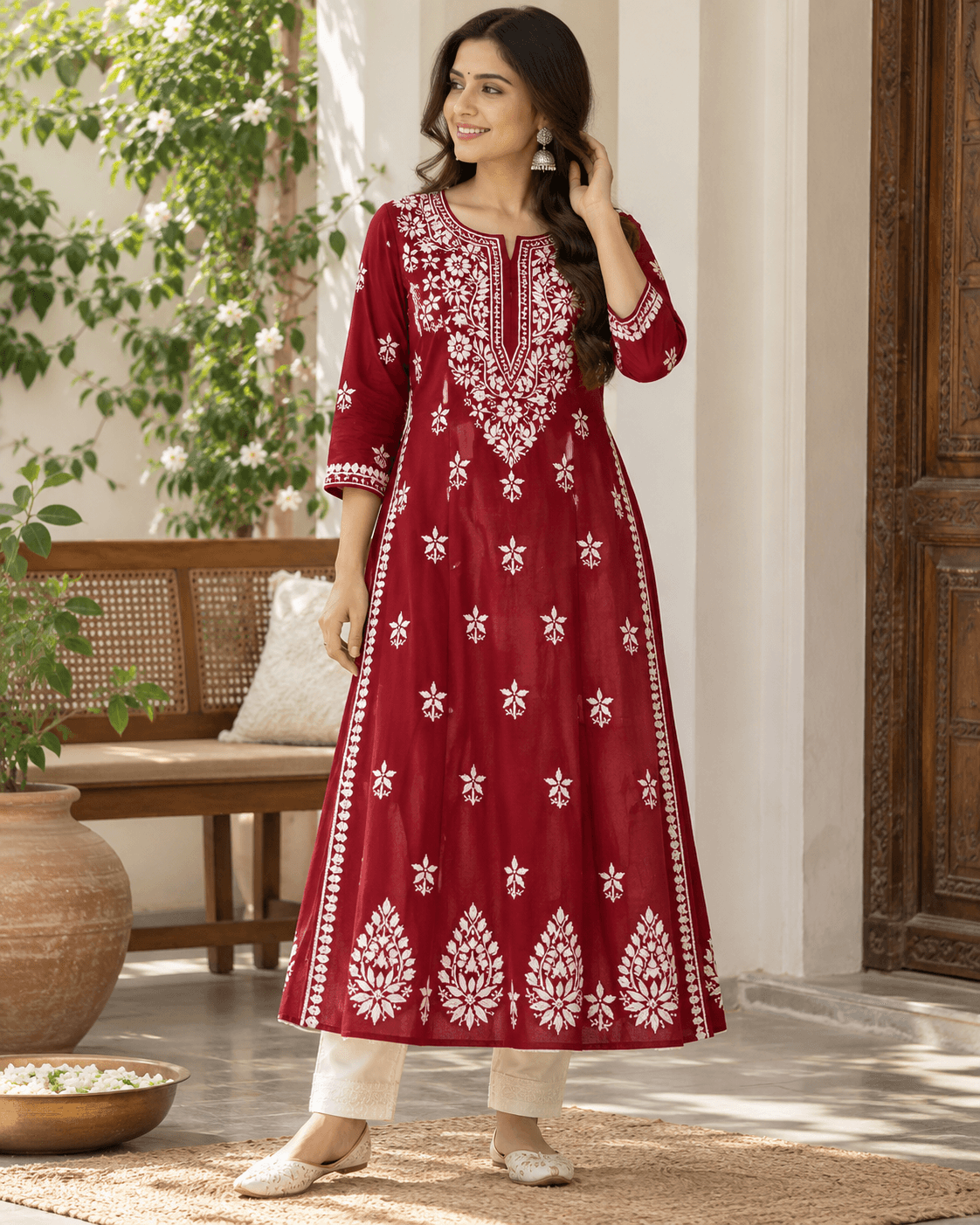
Everything that goes into a Chikankari suit set, and how to choose one for work, festivals and weddings.
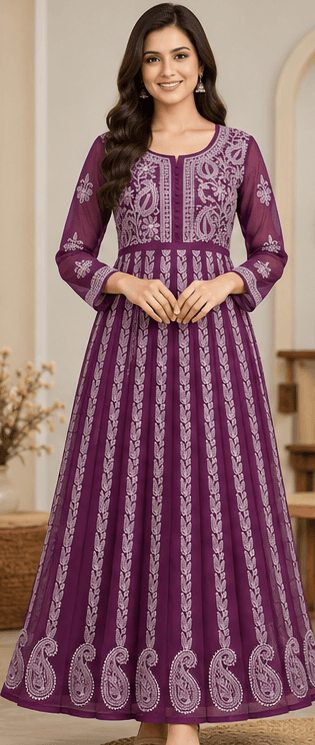
Why the flowing Anarkali is the most-loved festive silhouette in Chikankari — and how to choose yours.
From the collection
Mal cotton nayra cut with ghas patti work